
Inside the Cherokee County Most Wanted Program
The Cherokee County Sheriff’s Office page is where a local warrant check should begin. It lays out the office itself, the jail, the communications center, patrol coverage, and public contacts. What it does not offer is a current most wanted roster. There is no active-warrant export, no tip form tied to a roster, no reward schedule, and no archive of past listings. A third-party wanted page, an old image, a social-media repost, or a neighboring county program fills none of that gap. If the Sheriff ever launches an official Cherokee County most wanted list, rely on the agency’s live page for it. Check its date and its disclaimer there.
Cherokee County Most Wanted Routing
The sheriff’s contact numbers split by function. The Sheriff’s Office answers at 712-225-6737, the jail at 712-225-6738, and communications at 712-225-6728. There is no dedicated warrant or Crime Stoppers line in Cherokee County. When you call, say whether you have a routine tip, a court-record question, or urgent safety information so it lands in the right hands.
Local status: Cherokee County runs no public most wanted roster or reward program. An unofficial post does not establish that anyone is wanted, and no one should confront another person over a web result.
Sheriff's deputies also cover the rural corners of Cherokee County, including Cleghorn, Quimby, Washta, Meriden, and Larrabee. Cherokee, Marcus, and Aurelia each list their own city contacts. No city there posts a most-wanted page or warrant portal, so the county office is the best call for rural warrant questions.
How Cherokee County Most Wanted Lists Work
The sheriff also covers rural Cherokee County, including Cleghorn, Quimby, Washta, Meriden, and Larrabee. Cherokee, Marcus, and Aurelia keep separate city contacts. None of those cities publishes a most wanted or warrant portal, so the county office remains the best general route for rural areas.
Note: A published profile is only a snapshot. Absence from a list is not proof of no warrant, and appearance on an old page is not confirmation of current status.
For a Cherokee County case, search Iowa Courts Online for public docket information. The Clerk of District Court, at 712-225-6744, holds the official court record. The sheriff keeps service records. Each answers a different question than a publicity list does.
Cherokee County Federal Warrant Boundary
Cherokee County sits inside the Northern District of Iowa for federal court and U.S. Marshals service purposes. The U.S. Marshals district page posts district contacts, a federal fugitive program, and a 24-hour tip line, and it may show individual profiles. Check federal status through the issuing federal court, federal counsel, or the Marshals themselves. A federal program does not become a Cherokee County roster just because its service area includes the county. Federal warrants, state warrants, and local court records sit with different custodians. The statewide IOWA System is separate too: an agency-only wanted-person network, not a public list. Keeping these systems straight keeps a federal docket result from being mistaken for a local active warrant.
Cherokee County Most Wanted Tips
Call 911 for an immediate threat. For routine local information, use the sheriff’s official page or the agency contact for that location. For a truly federal matter, the U.S. Marshals Northern District of Iowa publishes 1-888-869-4589 as a 24-hour fugitive tip line. That number does not create a local anonymous-reward program, and Cherokee County has no reward policy.
- Choose the official agency that owns the matter; do not post the information publicly.
- State the observed location, time, direction of travel, and immediate safety facts without embellishment.
- Do not approach, follow, detain, photograph, or try to identify the person yourself.
- Follow agency instructions and preserve any relevant information without circulating it.
Key point: A tip is information for law enforcement, not confirmation that a warrant exists. Report and step back; never confront or pursue anyone.
Cherokee County Most Wanted Updates
Cherokee County has no published reward amount, eligibility rule, anonymous payout process, update interval, archive, or fugitive-of-the-week feature. Those gaps are worth knowing rather than papering over. Terms borrowed from another Crime Stoppers chapter would mislead you about anonymity, eligibility, or payment. If a local program appears later, check the publisher, the publication date, the warrant categories, the profile-removal rule, the update schedule, the tip method, the anonymity language, and the reward terms. Confirm the notice still lives on the agency’s own domain. An official link tells you what the program currently offers, without a copy of its names, photographs, addresses, or warrant numbers.
Research date: The Sheriff’s postings can change at any time, so recheck the Cherokee County Sheriff’s Office page for a most wanted list or warrant information.
How Most Wanted Differs From an Active Warrant
A most-wanted feature is just publicity, not legal process. An active warrant is different. Its real status rests with the issuing court and the agency that serves it. Plenty of warrants in Cherokee County never show up on any most-wanted list, and the absence of a roster changes nothing about how the court and law enforcement handle them.
| Feature | Most Wanted Program | Active Warrant |
|---|---|---|
| Scope | A selected, high-priority publicity subset when an agency maintains one. | Any warrant not yet served, recalled, returned, or otherwise resolved. |
| Custodian | The publishing law-enforcement agency. | The issuing court and serving agency hold different parts of the record. |
| Visibility | Program information may be public, but no Cherokee roster was found. | Some docket events are public; agency entries and protected material are restricted. |
| Current status | May lag arrest, surrender, recall, or publication changes. | Must be confirmed with the court or responsible agency. |
Cherokee County Federal Warrant Dockets
PACER is the federal courts' own docket system. It costs a few cents per page. A federal docket can show filings and case events for matters touching Cherokee County. It is not a nationwide warrant list, though. No plain "warrant" row is promised. CourtListener and its RECAP archive offer a free secondary index when contributors have added documents, but that index is incomplete and never replaces the issuing court.
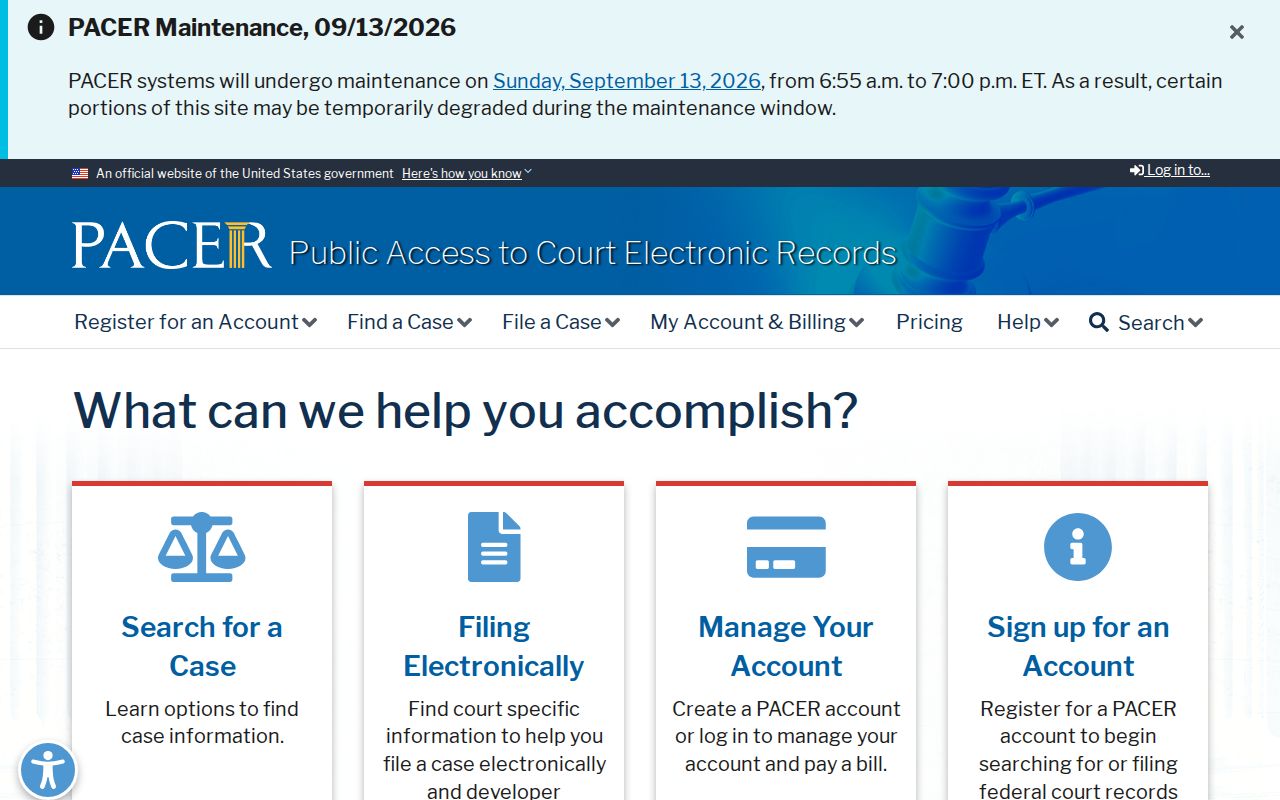
Federal dockets and the U.S. Marshals fugitive program answer different questions than a local warrant list does. Neither one replaces a Cherokee County warrant roster, and the county itself publishes no such roster.
Cherokee County Warrant Agency Routing
Where you take a question in Cherokee County depends on what you are asking. A general crime tip goes to the Sheriff or to the police department for that city. A question about a specific court record goes to the Cherokee County Clerk of District Court, at 520 West Main Street in Cherokee, IA 51012, reachable at 712-225-6744. The clerk can explain public docket access, courthouse terminal use, and copy requests, though court staff cannot give legal advice.
The smaller towns vary. Cherokee Police maintains a city page, and Marcus and Aurelia each publish city or police contacts. Quimby has an official code library but no public police or warrant page, and Cleghorn has no local warrant page either. For rural areas around Quimby and Cleghorn, the county Sheriff is the route to use. A public-record request works best when it names the custodian, the record type, an approximate date, the county, and any case or citation number you know.
When You Believe You Are Listed
Skip the third-party pages if a public profile might be yours. Treat no outside site as the deciding word on a Cherokee County warrant. Save the official URL and the neutral case details, and keep the profile itself to yourself. An attorney can confirm the record with the right court or agency. Counsel can also advise on voluntary surrender, an appearance, bond, or a request for judicial relief.
Important: Do not arrive at an agency based only on an unverified list and do not evade lawful process. Counsel can confirm the warrant and arrange a safer, case-specific response.
No statewide public recall or quash form and no Cherokee-specific warrant-clearance procedure or fee were located. Paying a listed fine is not automatically a warrant recall. The issuing court controls judicial action, and the current agency record may change after service or return. For the full local resolution framework, use Handling a Cherokee County Warrant.
If an online profile later disappears, do not interpret removal as a court ruling. Confirm the underlying case through counsel and the issuing authority. Publication choices, warrant status, bond conditions, and court appearances are distinct decisions recorded by different offices.