
Marcus Warrant Checks
Marcus has a police contact but no public warrant list or court portal of its own. For a city law-enforcement question, begin with Marcus Police. A filed criminal, traffic, or municipal-infraction case can be searched in the statewide public docket, and the Cherokee Clerk of District Court can confirm the official record after that. Rural and county service questions belong with the sheriff. A docket hit may show a warrant or a failure-to-appear event when the entry is public, yet it cannot prove the order is still active. New cases can lag before appearing online, older files may never be there, and confidential matters stay hidden. When a planned court appearance or surrender rides on the answer, use more than one channel in Marcus.
- Call Marcus Police at 712-376-4618 about a city police record or service question.
- Search Iowa Courts Online by name, exact birth date, case ID, or citation number.
- Ask the Cherokee Clerk at 712-225-6744 to explain the public docket and available copies.
- Use the Sheriff at 712-225-6737 for rural or county service questions.
- Ask the court or an Iowa attorney for safe next steps before appearing in person.
Marcus Warrant Contact Window
The 2020 incorporated-place table counted 1,079 residents in Marcus. That figure explains the city's spot in the five-city set and says nothing about warrants or crime. For actual help, the official Marcus government page lists the police office at 712-376-4618 and the city clerk at 712-376-4715. The published city contact is 222 N Main Street, PO Box 542, Marcus, IA 51035. City-government hours run Monday through Friday, 7:00 a.m. to 4:00 p.m., closing noon to 1:00. Confirm before visiting. Parking tickets and city payment questions go through the clerk; local agency questions go to the police. Neither office is a judicial clerk or a municipal warrant counter.
Marcus Police
712-376-4618
Marcus clerk
712-376-4715
For emergencies, call 911 rather than an administrative number.
Marcus Warrant Policing and Courts
Marcus keeps a local police contact, while the Cherokee County Sheriff covers broader county and rural duties. A dated city comprehensive plan described part-time police service, no fixed police hours, coordination with nearby communities, and emergency dispatch through the Sheriff. Treat that document as historical planning context rather than a promise about present staffing or office hours. There is no separate municipal court in Marcus. Iowa's 1973 Unified Trial Court Act abolished the former municipal, mayor's, and police courts, so municipal infractions and state traffic or criminal matters now flow through the unified Iowa District Court system. Magistrates handle scheduled violations, simple misdemeanors, municipal infractions, and preliminary matters. City parking stays with the Marcus clerk.
Marcus Has No Warrant Portal
The city publishes no Marcus warrant search, active roster, city docket, warrant-clearance form, or local warrant fee. That gap matters. It means an unofficial name-search site is no substitute for the real channels. The official city page is a contact source, and the city code covers ordinances; neither shows live warrant status. For a public District Court record, use Iowa Courts Online or the Cherokee Clerk. A city parking ticket belongs with the Marcus clerk, police service with Marcus Police, and rural service with the county sheriff. Ask whichever office answers to point you to the record's keeper when a matter crosses those lines.
Source rule: An official ordinance proves what a rule says, not whether a judge issued or recalled a warrant in a specific case.
A blank result in a Marcus search is one data point only. The court or agency holding the record gives the confirmation.
Warrants in Marcus: The Main Types
Marcus residents can meet several kinds of process inside the same unified court system. An arrest warrant follows a complaint and a probable-cause finding. A bench or failure-to-appear warrant can follow a missed required setting. A traffic-linked warrant stays part of the citation case, and a municipal infraction may start with the city but is heard through District Court.
| Warrant Type | How It Arises | Who Issues It |
|---|---|---|
| Traffic-related | Missed date or unresolved court citation | Iowa judicial officer |
| Municipal infraction | City code case filed with the court | Iowa judicial officer |
| Bench or FTA | Missed required appearance | Iowa judicial officer |
| Arrest warrant | Complaint and probable cause | Magistrate or authorized judge |
Marcus Docket Search by Identifier
The public court portal offers four search modes worth knowing. A name search needs at least two letters of the last or firm name, and a first name narrows it further. Spell exactly, and use the percent sign as a wildcard. Date-of-birth mode requires an exact date plus first and last name; treat birth dates as sensitive and do not publish them. Case-ID search requires the county and case type, and the help describes a 17-character identifier while warning not to swap a zero for the letter O. Citation mode takes the citation number. Codes such as FE, AG, SR, SM, ST, NT, OW, and CR identify case classes, and SW marks a search-warrant case type, not proof that an arrest warrant exists. The free view can show basic case data, filings, parties, charges, disposition, and financial entries, though some detail may need a courthouse terminal or subscription. Marcus uses no separate local case-number format, so the statewide identifier is the one to reference.
Marcus Warrant Records: What They Show
A matched public docket can display county, case ID, party, charge, dates, judicial events, disposition, bond, service, return, and payment data when those fields are public and entered. The online screen is only a clerk-maintained index, not the official court record for Marcus. Read the latest event alongside the earlier case history, then confirm it.
| Case ID | State-format identifier such as 03CHCR00000000000, not a real record. |
|---|---|
| Party | Indexed name, subject to spelling and identity limits. |
| Charge | Filed allegation and code, not proof of guilt. |
| Issuing court | Iowa District Court, not a Marcus municipal court. |
| Bond or money | Public set, posted, paid, or due entries when applicable. |
| Events and status | Docket history requiring current clerk confirmation. |
Marcus Citation Posting Delays
Give a fresh Marcus citation time to land in the system. Iowa Courts Online help says cases can take one business day to post, while citations or payment data may take up to 14 days. The Judicial Branch payment page gives a slower window. Citation entry, it warns, can take 14 to 21 days. Both notices are official. So a recent Marcus ticket that does not show up yet calls for a phone call to the clerk, not a guess about the outcome.
A blank search has other explanations too. Old files, a confidential or juvenile case, a name spelled differently or entered in a different order, an out-of-state identifier, or the wrong county and case type can all hide a case. The public portal cannot display material the law keeps confidential, and Marcus offers no local docket search to fill those gaps. With a deadline close, contact the Cherokee Clerk at 712-225-6744. Keep your citation and payment receipt handy so staff can find the right case fast.
Marcus Parking Takes a Different Route
City parking breaks the usual court-search pattern. The Iowa Judicial Branch says city parking tickets are not listed or paid in Iowa Courts Online. That means a Marcus parking question belongs with the city clerk at 712-376-4715. A missing parking item in the state portal proves nothing either way. It does not mean the balance is cleared or that no record exists.
A state traffic citation or a municipal infraction that has entered District Court works differently. Search by name, case ID, or citation number, pick Cherokee County and the right charge type, then confirm the docket with the clerk. The ePayment interface allows name and identifier searches, though payment there is not a warrant-status service.
Payment warning: Paying a court amount does not prove that a bench or failure-to-appear warrant was recalled.
Marcus publishes no warrant-recall form or city clearance process. Ask the issuing court what remains due on the case.
Marcus Warrants and Cherokee County
Marcus Police handle city matters, from originating a case to serving one. The Cherokee County Sheriff covers broader county and rural duties. Once a case is filed, the Cherokee Clerk maintains the court-side record. Criminal-justice agencies can query the restricted IOWA System, which exchanges wanted-person information and connects to national networks. The public has no login to that system.
Warrant flow: Marcus Police › Iowa District Court › Marcus Police or Cherokee County Sheriff › restricted IOWA System
The Cherokee County warrant records overview supplies the full county route. At city altitude, keep it simple. Start with Marcus for a local agency or parking question, and use the county clerk for the judicial record.
Marcus Requests Without Guesswork
Start a records request with the Cherokee Clerk, the proper local court custodian. The official court page lists 520 W Main Street, Cherokee, IA 51012; phone 712-225-6744; fax 712-225-6749; and CountyClerk.Cherokee@iowacourts.gov. A courthouse public terminal is a good alternative when online detail is not free or an older case is missing. Describe what you want, the county, an approximate date range, and a case or citation number if you have one. Say whether you want inspection, electronic delivery, or paper.
The Iowa court request page permits oral or written requests, though a complex request can require writing. Copying, postage, staff search, review, redaction, supervision, or programming costs may apply. Marcus sets no warrant fee, recall fee, local search fee, or bond-window schedule, so ask the custodian for a current estimate. If access is denied, request the reason and ask whether a narrower public record can be provided instead.
Accessing Marcus Warrant Records
Iowa Code chapter 22 governs public records and its exceptions for state, county, and city custodians. Court access also depends on rules and statutes tied to the record. Material filed to secure an arrest warrant stays confidential until the events set by section 804.29, and it may remain under sealing limits. Juvenile records get separate protection. Search-warrant applications follow chapter 808 and are not arrest-warrant results, a distinction worth knowing in Marcus.
Key Rules:
Iowa Code chapter 22 covers access, exceptions, and reasonable costs.
Iowa Code section 804.29 protects warrant-securing information until statutory events occur.
Iowa Code section 232.147 restricts juvenile-record access.
Marcus Official Payment Safety
A caller claiming an immediate arrest is applying pressure to push you toward an unsafe payment channel. Slow down. Use an official government page or a number you found on your own. The Judicial Branch scam warning cautions Iowans about false warrant and court-payment demands. Never use a link supplied only by an unsolicited caller or message. The official Marcus government page lists the city's local contact details.
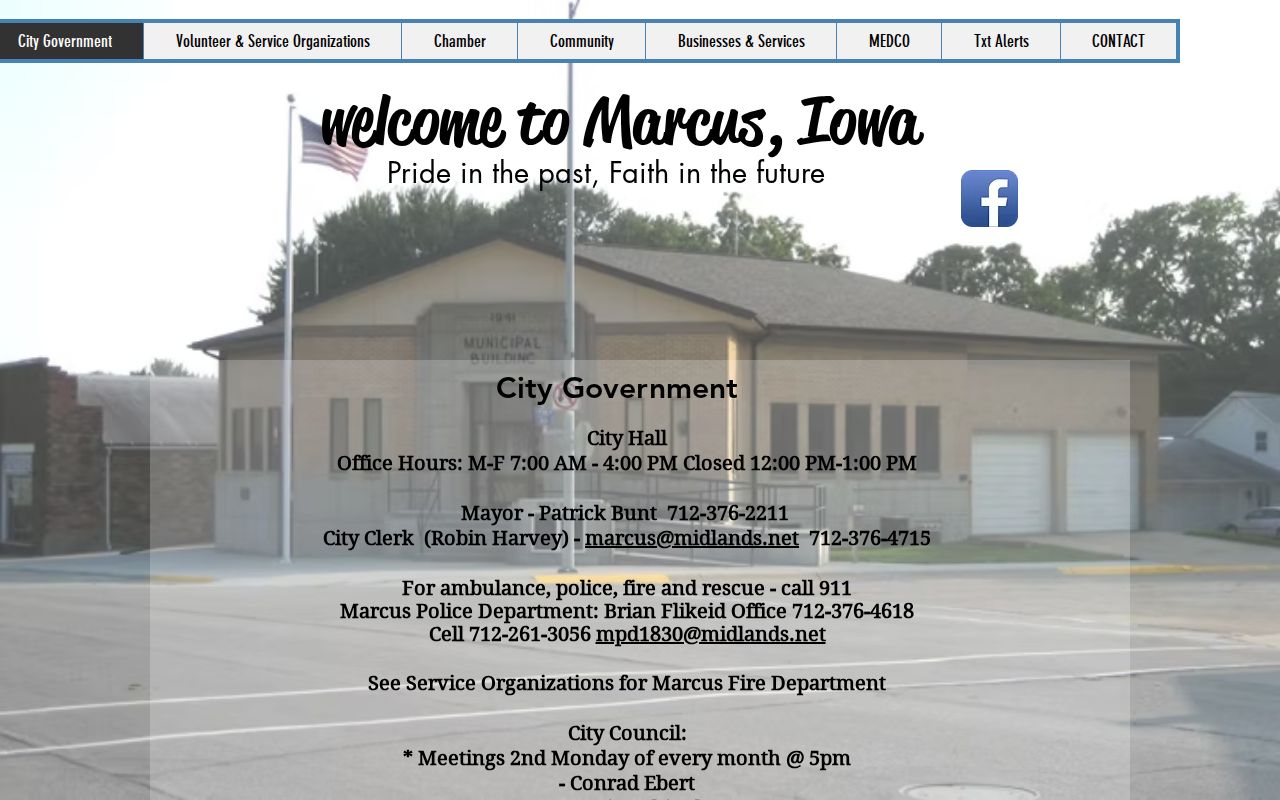
The city's contact details help a resident tell the city clerk from the police office. They do not create a city court, and staff there cannot guarantee a District Court warrant check. Use the clerk of District Court for the official case record. Save any suspicious message, but never follow its payment directions. Someone resolving a Marcus warrant can call a known city, county, or court number and ask which office controls the record. That simple check guards against fraud while keeping you on the proper legal route.